
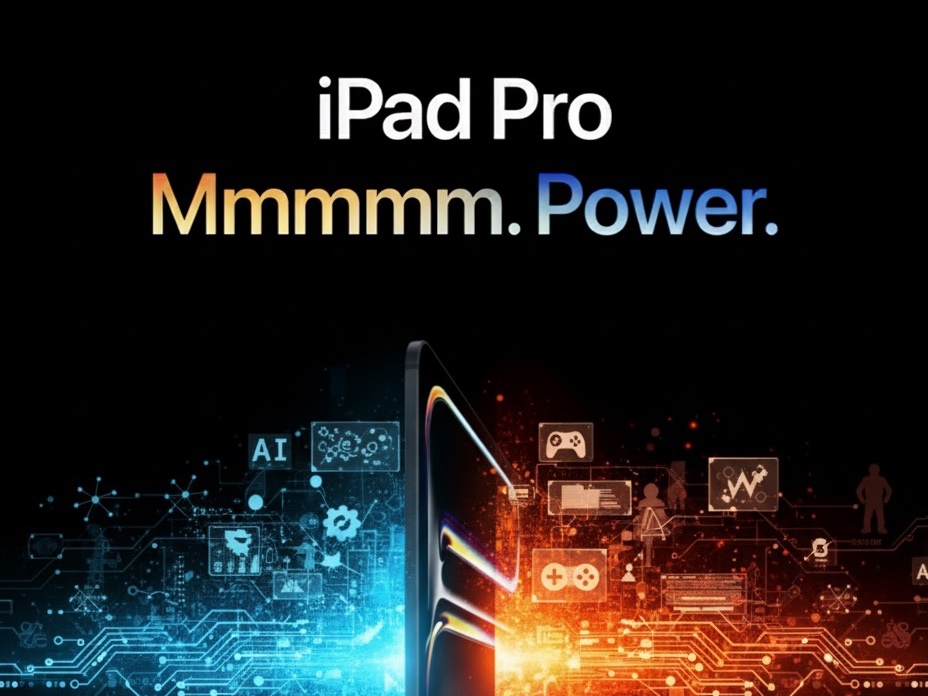
Now that the dust is starting to settle, we can start to sort the wheat from the chaff in terms of what the meaningful improvements to the new M5 iPad Pro are.
As you have come to expect from your boys here at iPadProductivity.com, we have been keeping our ear to the ground, listening carefully to what is being said about the new M5 iPad Pro, so in this article we will give you our take on this new device, what is new and what it all means from people who actually work on an iPad, so lets dive in.
Banking on AI “feeds two birds 🐤🐤 with one scone”

The first bird 🐤 is AI 🤖
It is clear Apple’s strategy for the M5 iPad Pro is fine tuned towards AI performance, this is most notably obvious from their launch marketing, but why have they gone this route?
Right now we are living through the “AI Race”, where large companies are banking on AI causing the next major disruptor in technology.
Just have a look how jumpy the market has been this year. Take the Chinese AI company Deepseek for example. When Deepseek launched it’s LLM’s in January this year, they achieved similar performance to OpenAI, Anthropic and others. Deepseek claimed they achieved this with significantly less compute power compared to Nvidia’s advanced and expensive GPU’s, well, when the market heard this, they JUMPED and one of the Largest technology companies in the world (Nvidia) lost 18% of is share price over night.
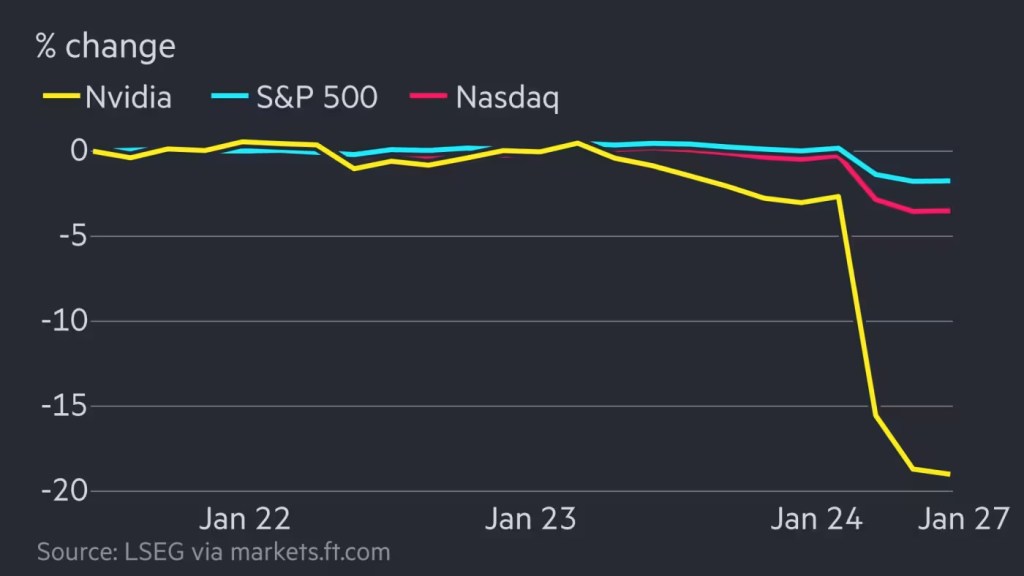
In monetary terms this equated to $589 billion, which was wiped off their market cap, resulting in the largest loss in stock market history. That’s how on edge the market is around AI!
Apple also knows it‘s iPad customers own their devices for longer periods of time, and if AI continues on its current trajectory, Apple has to ensure its market leading tablet is future proofed.
Lastly, AI right now is a major sales buzz word, Apple knows this and is cognizant of the fact that it’s customers right now want AI capabilities, so it’s delivering.
The second bird 🐤 is “Gaming” 🎮

Not sure if you noticed the wording in the graphic above, but Apple is almost certainly playing on the word “game” in “game-changing”, why, because to enable major advancements in AI compute power, you need major advancements in GPU performance and that means gaming gets a huge boost!
Apple knows is customers love gaming on the iPad Pro, 65%-70% of App Store revenue is attributed to games. For Apple to attract more AAA titles to the iPad Pro, developers have to know the device’s hardware will support their titles.
Assuming Apple’s Strategy above, let’s look at what has changed.
Starting with the externals, nothing has changed, the design has stayed the same. There is no change to the screen, camera’s, speakers, colours or chassis. This I believe is due to two main reasons.
1.) The M4 iPad Pro brought with it a major design overhaul, most notably a chassis redesign. It was the thinnest device Apple has ever made and required a huge investment into R&D, one you don’t want to do year on year when you have eight different product lines each with multiple products that need breakthrough R&D funding.
2.) Apple has to ensure it gives suppliers enough time to produce and sell accessories, like cases, screen protectors and other 3rd party peripherals, before launching a new design. Otherwise 3rd party suppliers wouldn’t find it feasible to manufacture for the iPad Pro and accessory options would shrink for Apple’s premium tablets, making the device far less supported and thus less desirable.
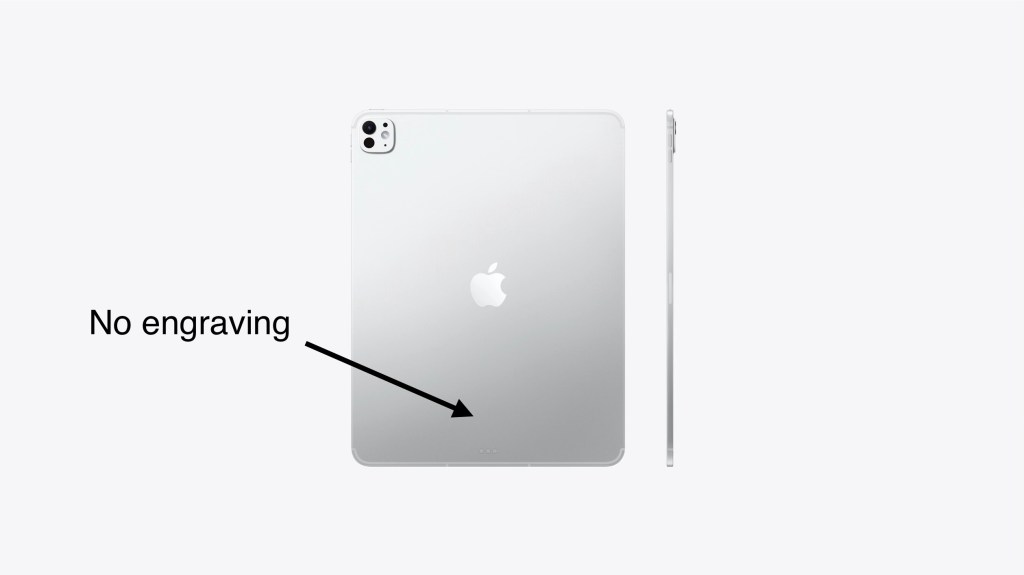
The only external change we can see, is that the iPad Pro engraving has been removed. See Below 👇.
It’s all about the Internals.
The saying “it’s not what’s on the outside that counts, but rather wants on the inside” certainly rings true for the M5 iPad Pro and here’s where it gets interesting.

We are not going to re-hash specs that you can find on Apple’s website, but rather talk about what stands out to us the most.
Naturally the M5 was going to be based on Apple’s 3 nanometer technology used in the M4 and newly released A19 Pro chip. In our last article we alluded to fact that this was a good clue into the future M5 SOC and what we could expect to see, with specific reference to the neural accelerators. We are pleased to see that was the case.
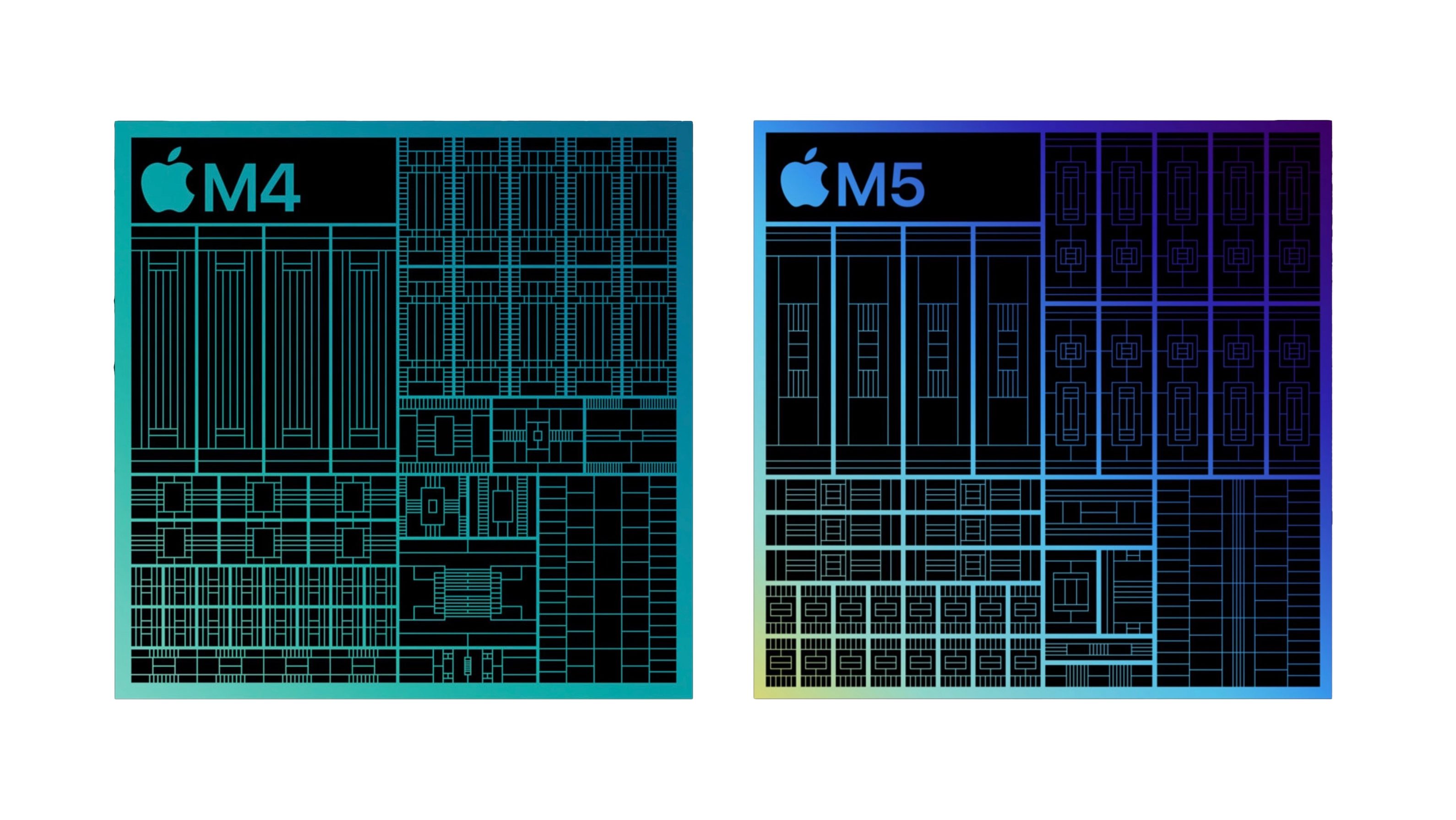
What is interesting though, is that Apple are using the same 10 core design but with one heck of a twist. Apple are “supercharging” every core with it’s own Neural Accelerator, to dramatically boost core performance in both GPU and CPU cores. Apple claims these cores are now the fastest in the world!
So how does M5 actually compare to M4 in GPU Performance.
Aside from gaming (which we will talk about below), one of the most demanding GPU tasks for any computing device is video editing. These processes provide a good real world benchmark for graphics performance comparisons because they can be easily measured.
Not to cut to the chase but the new M5 iPad Pro is now capable of editing up to 5 streams of 4K ProRes Footage!
Oddly, Apple didn’t show the actual percentage gains when comparing the M5 against the M4 on its page, so for iPadProductivity readers, we fixed it for you 😉.
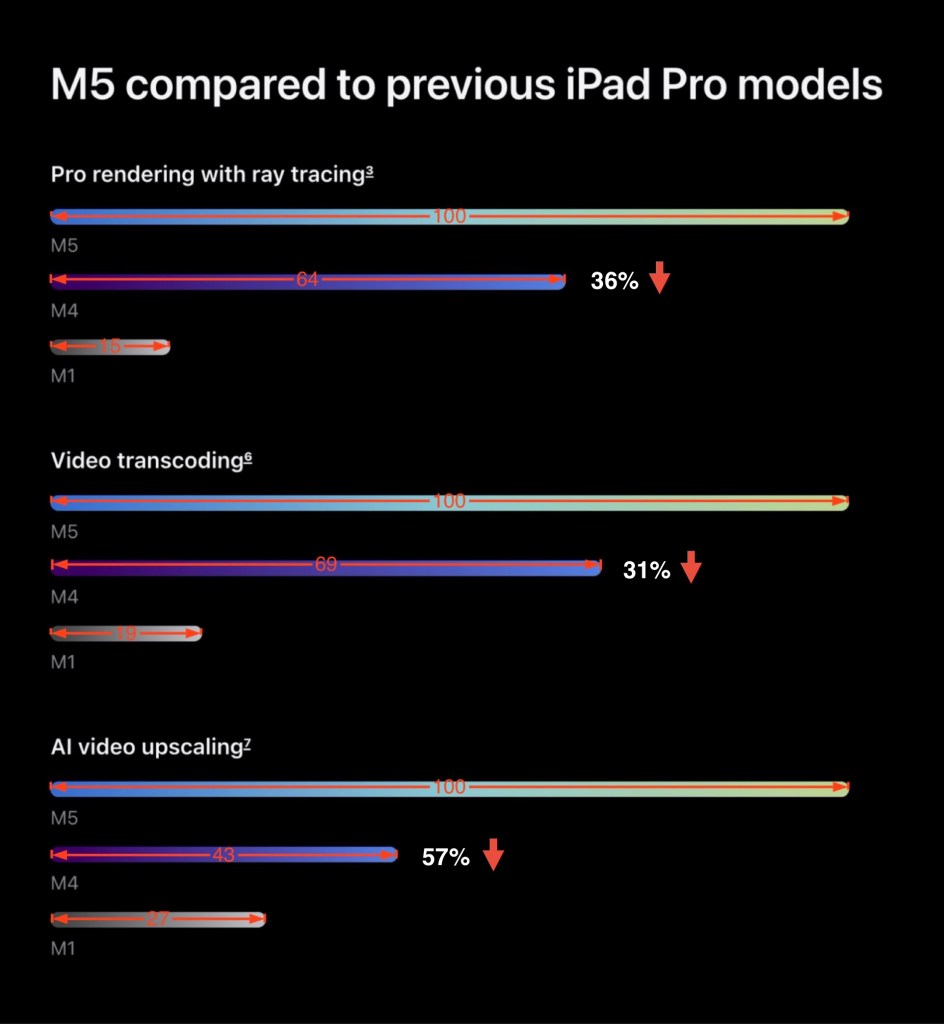
A BIG Boon For Gamers Even When Coming From M4
The M5 chip now delivers 60% faster GPU performance than M4! New 3rd generation ray tracing also provides 45% faster performance in demanding gaming compared to M4.
This effectively means games are going to show one of the most, if not “the” most noticeable improvement on the new M5 iPad Pro. Apple also further touts its Dynamic Caching to maximize performance in pro apps and intensive games.
Providing more credence to our theory about Apple’s focus on AI and Gaming, on the iPad Pro page, tapping on “Learn how M5 powers performance” opens a section starting with a header image of a graphics intensive game before talking about the M5 chip. One can clearly see this an area Apple is focusing on.
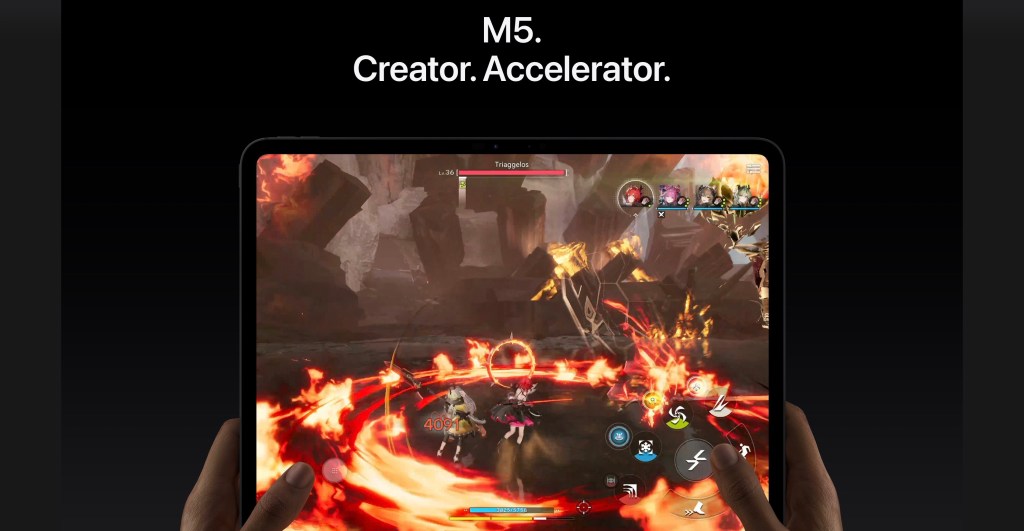
Continuing on the gaming front, gamers and creatives with be happy to hear the new M5 iPad Pro can now drive 120Hz external displays.
Apple has also announced a new feature to support this called “Adaptive Sync”, which provides lower latency for gamers using an external display by adapting the GPU to the exact timing of the monitor. AMD’s well known FreeSync is a classic example of this. See below 👇.

Did Apple Deliver On Our Ram Expectations?

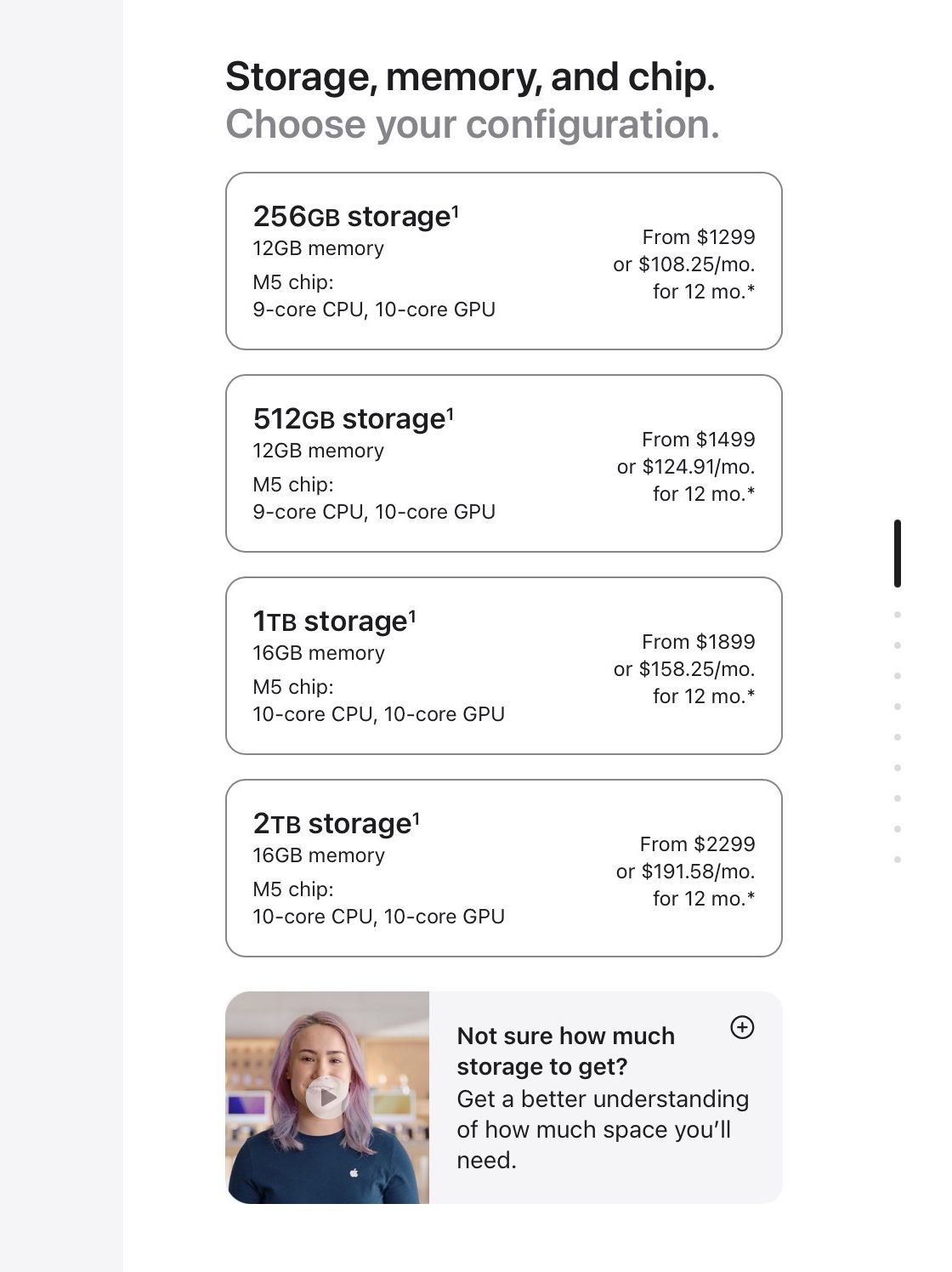
No they did not. Honestly we would have liked to have seen 24GB or 32GB options BUT, and there is a big “but”, the lower storage iPad Pro’s (256g & 512g) now come standard with 12g of RAM which is a big bump in the right direction and there’s more…
What we are MORE excited about, is that to offset the disappointment of only 16g in the top tier storage models (1T & 2T) models, Apple have given us 2 X faster SSD performance compared to M4 which was blazing fast and 30% more memory bandwidth, up from 120GB/s in the M4 to 153GB/s in M5.
Although there is no substitute for RAM capacity, the performance increases in SSD, memory bandwidth and RAM together with Apples Dynamic Caching and Memory Swop, may likely negate the need for more than 16g of RAM.
Food for thought: the M5 chip can support up to 32GB of RAM, Apple clearly believes it not necessary on the new iPad Pro 🤷♂️, at least right now, I suspect they are saving this for the next M6 chipset.
Interestingly for the first time, Apple are now clearly stating the ram amount when choosing your storage tier to purchase, see below 👇.
Even if you are not a gamer, video editor or AI user, you will still notice and improvement in system performance thanks to 15% improved CPU Multi-threading capability.
In the real world terms, improvements in Multi-threading will instantly improve system responsiveness. For example, if you are downloading a file, multi-threading allows the system to simultaneously process touch inputs and other tasks without bottlenecking, making your experience feel smooth and fast.
Charging gets an upgrade. ⚡️
Good news here, the M5 iPad Pro can now charge to 50% in 30 mins! This is achieved using a 60W or higher charger. We certainly won’t complain, this will come in handy when you need to leave the house by a certain time and are charging your iPad Pro right to the last minute.
Admittedly this does happen to me a fair amount 🤣.
Connectivity – M5 iPad Pro (1), M5 MacBook Pro (0)

Skipping the Macbook Pro again this year is Cellular. This time the M5 iPad Pro receives Apples own C1X modem, providing a 50% increase in cellular data speed performance over the Qualcomm modem, all while using 30% less energy.
Mike and I often rely on cellular for our day jobs but this is notorious for chowing your battery. I am excited to see if we can notice an improvement in battery drain with the new C1X chip.
Also skipping the MacBook Pro this year, the new M5 iPad Pro gets Wi-Fi 7 and Bluetooth 6, thanks to Apples new N1 Wireless Chip. Wi-Fi 7 is significantly faster than Wi-Fi 6E (approximately 4 X Times faster) and provides much lower latency, again great for gamers.
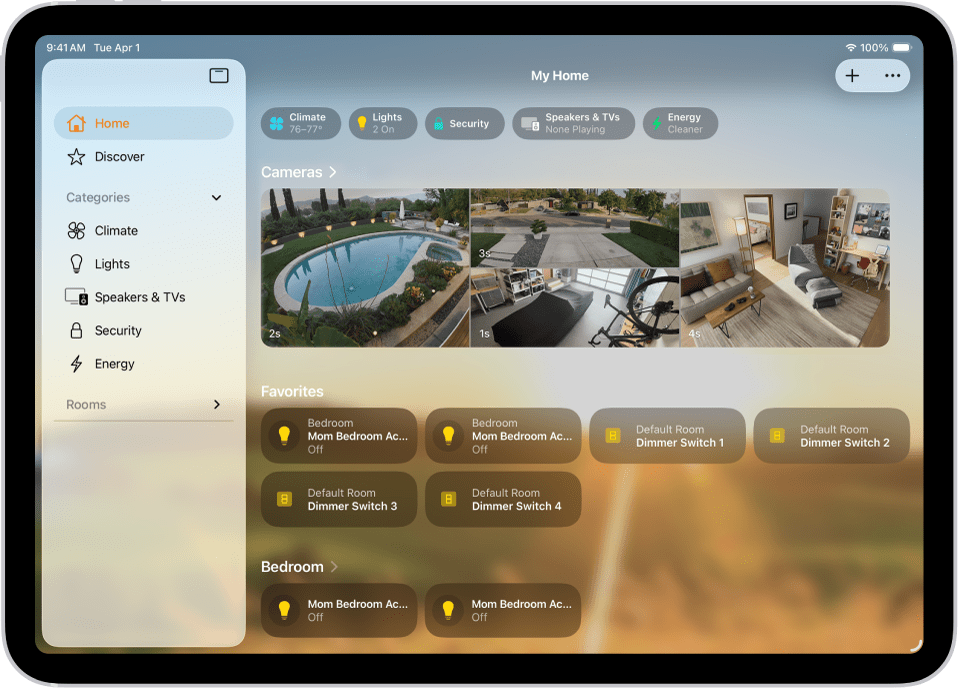
As someone who has embraced smart home tech, I am delighted to hear the M5 iPad Pro now also supports Thread. This will allow me to directly connect to smart home devices, such as new Matter enabled products, giving me more control over my smart home.
This will be particularly useful when troubleshooting and needing more granular control over settings and features.
Conclusion

We feel the M5 iPad Pro is more than just a spec bump and a worthwhile upgrade for Pro users reliant on GPU performance, even when coming from an M4 iPad Pro.
Further explanation:
Yes you read that correctly. If you work from an iPad Pro for your job and you rely on GPU intensive workflows, like AI engineers, Machine Learning Researchers, Data Scientists, or perhaps you are a 3D modeler, Animator, Video Editor or maybe you are an Artist, Architect or Graphics designer, or you simply enjoy AAA gaming, you are going to notice a big difference moving from M4 to M5 and that should make upgrading worth it.
If you would like to support us, Subscribe below, it’s free and it helps us keep our site ad free.
P.s I wonder if Apple have used a Vapor Chamber in the new M5 iPad Pro like they did in the iPhone Air and 17 Pro, that remains to be seen.
Chat soon 😉
Matt




Leave a comment