

Apple just debuted a new piece of technology that has left many people shocked at it’s overall impact. Yes you may have guessed it, I am talking about Apple’s new Vapor Chamber, and we think it could be a game changer for the new iPad Pro and here’s why.
On the 9th of September Apple announced a new super power for the iPhone Pro and Max, this came in the form new piece of re-designed technology that Apple have never had in it’s Phones before, – a special Apple designed Vapor Chamber!
What is Apple’s vapor chamber and how is it different
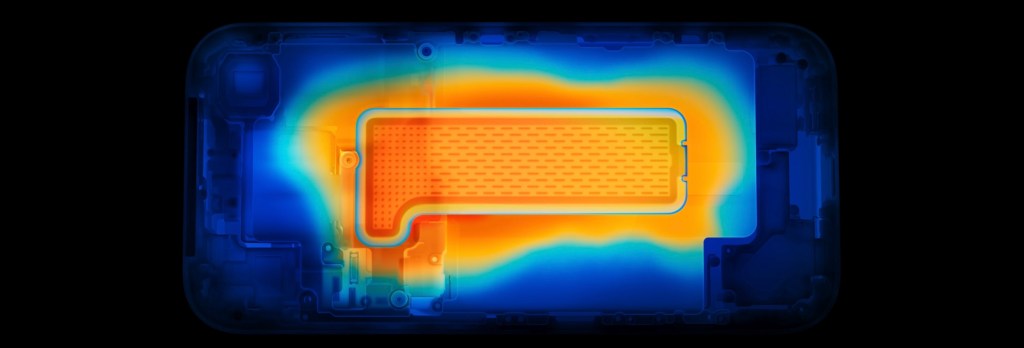
A Vapor Chamber is a cooling system designed to effectively move heat away from the processor to allow for better sustained performance and prevent thermal throttling.

As you can see above 👆, it looks like a wafer thin piece of metal, usually made of copper or aluminum (because these are excellent thermal conductors). This is actually made of two sheets of metal, laser welded together to form a sealed chamber which contains deionized water.
How it works
Vaporization – As the processor heats up, the water in the chamber turns to vapor. ♨️
Heat Transfer – The hot vapor moves to the cooler areas of the chamber. 💨
Condensation – The cooler areas cause the vapor to condense back to liquid dissapating the heat to phones main body. 💧
Recirculation – The condensed liquid is then absorbed and recirculated via a wick in the chamber back to the heat source, completing the cycle. 🔄
By dissapating heat build up away from the chip, the processor is able to run at peak performance for much longer. Apple say 40% longer!
Why Apple’s Vapor Chamber is better
Now Vapor Chambers themselves are not new, but what makes Apple’s design and intergration unique, is that it is laser welded directly onto aerospace grade materials found in the chassis.
Apple’s special chassis design together with these aero grade materials provide a greatly improved link or conductive pathway if you will, for the transfer of heat from the vapor chamber, to dissipate to the outside of the phone, think of the phone as a giant ultra effective heat sink.
But Apple also controls the hardware and software to match the thermal performance of the Vapor Chamber perfectly. This means their algorithms and chip architecture are in perfect sync with their own custom designed Vapor Chamber, to provide “tuned” thermal performance, vs a drop in Vapor Chamber from a supplier.
Increase in clock speed Means more heat.
We’re expecting the same 3nm chip architecture used in the M4 iPadPro for the M5, but now on the (N3P) node, but judging by the enhancements made to the new A19 Pro chip, we can likely expect to see some new technology coming to the M5. Of course we can expect a few tricks from Apple to boost performance, one such card up their sleeve could be increasing the CPU clock speed or frequency.
Interestingly though, there were two years where Apple did not increase the clock speed of their new chips. This was in 2018 with the introduction of the A12X Bionic and again in 2020 with the A12Z Bionic.
On these two occasions the CPU clock speed stayed the same at 2.49 GHz even with a 16 month difference. A extra core in the A12Z resulted in approximately a 10% improvement in GPU performance but that was really about it. Below 👇 you can see the same clock speeds for the two chips and a near identical single core speed.

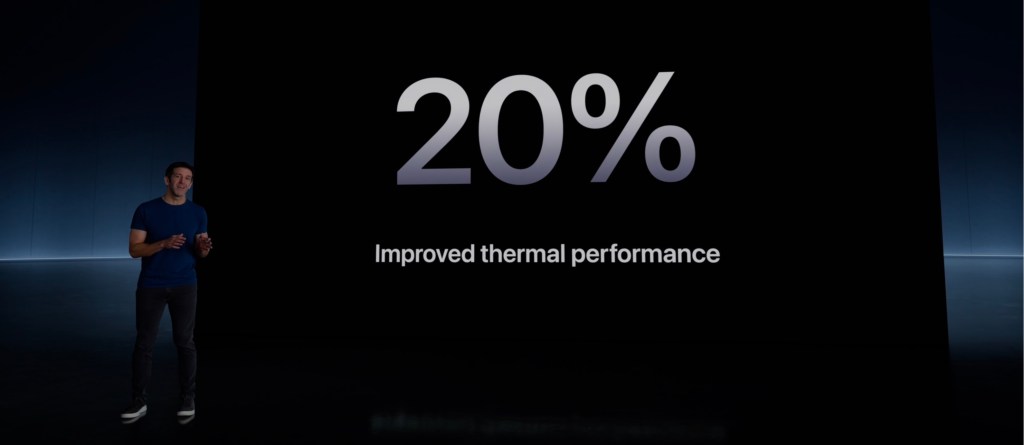
Now without getting into transistors, logic gates and how many times they switch and change their state from 0 to 1. As you increase clock speed (frequency) there is more waste heat. We have actually seen Apple try and control this excess heat in the M4 iPad Pro, which saw a clock speed rise of 0.4GHz from 4.05 GHz in the M3 to 4.41 GHz in the M4. Apple did this with the introduction of graphite sheets in the main housing of the iPad Pro, coupled with copper in the Apple logo on the back, very clever when you think about it and it worked! Apple claimed a nearly 20% increase in thermal performance.
However the introduction of a Vapor Chamber the new M5 iPad Pro would be a whole new kettle of fish. This wouldn’t be a passive heat sink-type technology like in the M4 iPad Pro but rather an active cooling system, which could offer significant performance improvements through thermal management.
On device AI processing is the clue.

Apple has made it clear it wants less reliance on AI cloud computing and more on-device AI processing . We know this because of a few reasons;
Privacy – One of Apple’s biggest core values and selling points, is its dedication to user privacy. When 3rd party cloud computing is used, Apple has no control over the data and given Apple doesn’t use your data for core revenue generation, one has many more reasons to trust their use of it.

Unique Silicone – Just look at the development of Apple’s Neural Engine, which in recent years is designed solely to accelerate machine learning and AI tasks. First introduced in 2017, Apple’s latest Neural engine in the M4 iPad Pro is 60 X faster, from 600 Billion operations per second to 38 Trillion, in just 8 years.
Data is Money – Your data is hard currency and Apple does not want to give your data to its competitors for free, as this ultimately helps them grow to become bigger competitors to Apple. Take Google & Meta for example, both companies rely on your data to make money, the more data they have, the more effective they are at selling ads and the more they can invest in R&D for products like the Google Pixel or Meta’s Smart Glasses etc.
It is clear that Apple are trying to future proof their devices, by preparing for advanced AI and graphics requirements which the market is showing a clear demand for. Also think about how rapidly large language models are evolving and growing and that Apple has committed itself to running these locally.
The developments we are seeing in both LLM’s and Generative AI require serious hardware to run on device and given the iPad Pro plays more in the creative, Laptop/ desktop space than an iPhone, it is likely we can expect more than just clever graphite and copper heat sink to mange it’s thermals.
A Hint at whats to come!
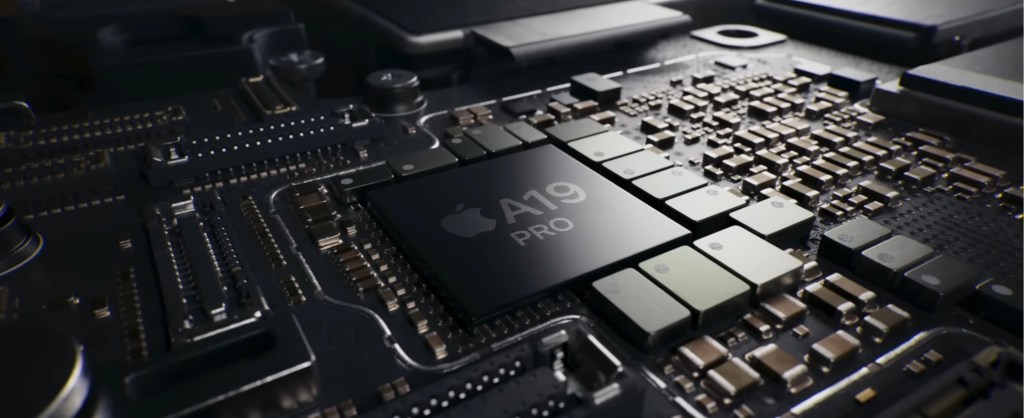
Personal on device computing in the age of rapidly evolving AI is a very hardware demanding space to play in. The most notable improvement to Apple’s A19 Pro chip over the previous years came as a result of two things:

1.) An increase in on-chip memory in the from of SLC (System Level Cache). For example SLC increased from 12MB to 32 MB in the A19 Pro chip!
2.) Apple’s new the thermal management system, the Vapor Chamber.
Given the reasons above, we should see the same on the new iPad Pro M5.
Lastly, AAA Gaming
Gaming is most loved and enjoyed on a larger screen, this goes without saying. We are seeing a flurry of AAA titles slowing making their way to the iPad. As I wrote about in a previous blog post here, where a major benefit of ram for game developers, was the ability to bring their AAA titles to iPad’s with higher ram capacities.

A spin off of increasing ram to support AI demands as well as improvements to on-chip memory, will be improved performance for graphics intensive AAA games.
But of course with intense gaming, like AI use comes heat. Here again the inclusion of a Vapor Chamber would be a huge advantage.
But will we see a Vapor Chamber so soon after the iPhone?
The likely hood that Apple’s new Vapor Chamber technology will come to the iPad Pro, we think, is high. For one, Samsung’s Galaxy Tab S9 already uses Vapor Chamber cooling, so does the ASUS ROG Flow Z13 gaming tablet as well as the REDMAGIC Astra Gaming Tablet.
Secondly the fact that the adoption of a Vapor Chamber has so heavy impacted the performance of the new A19 Pro chip, in key area’s for Apple’s audience (being AI and gamining), leads us to believe this is a no brainer for Apple.
We will see in October when Apple is likely to launch the M5 iPad Pro.
Thanks for Reading and if you enjoy our iPad dedicated content subscribe below to join our blog.
See you on the next one 😉,
Matt





Leave a comment